What is normal exactly? When you think someone or something is normal, what do you mean? Is normal when whatever or whoever looks or acts like you expect? Or is it when who or what behaves appropriately? Is normal when someone simply says it’s normal or when research proves it’s normal?
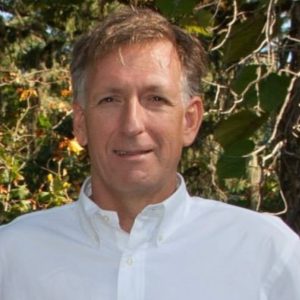
Doug says, “Normal is the setting on a refrigerator”. He’s right you know.
I remember the challenges I felt in middle school (it was called Junior High when I was enrolled), trying to fit in with my peers and conform to the ever-fluctuating young teen standard. My goal was to be normal. If I was normal, I thought I would be liked. I dressed and behaved just so, looked in the mirror way to often, and hoped, worried and anguished over receiving the acceptance and approval of my peers. I struggled tirelessly to be normal, to not stand out, be weird, peculiar or unusual in any way.
The early teen judgement was palatable. The prejudice was painful. The sharpness left its mark.
Then came high school. The pimples lessened. My hair was “right” for the current style. I became more comfortable in my skin and I found what I loved. What I thought my peers thought of me became less important year by year. My self-confidence grew and insecurity died down. Laughter matured. Friendships deepened. Knowledge expanded.
Then came social media. The expectation of “normal” hit a new plateau. Many social media users are obsessed with the perception of the perfect life. The perfect family, the perfect smile, the perfect job, dog, cat, vacation, dinner plate… I have read studies and heard and even felt at times, as I am sure you have as well, that the perfect everything perception of the social media influence intensifies peer pressure and alters the standardization of the moving target of normal. It’s like junior high all over again, but on steroids. It’s computerized. Face-to-face is no longer a requirement to feeling the insecure, embarrassed and fearful emotions of fitting in.
Illness of any kind can be off-putting with regard to normative standards and fitting in, especially when the illness is not understood. When I was battling cancer for instance, I experienced both the shun and embrace of humanity. As my appearance changed with treatment – hair loss, weight loss, energy loss – I no longer fit the norms I had created in my life. I wasn’t as bubbly and jovial. My selfies looked tired. I talked out loud about things like death and Jesus. I ate organic vegan foods, herbs and drank green tea, and I wore a face mask, a head scarf and un-ironed cotton in public. All of this made some of my peers, who knew me before, fidgety, nervous, tense.
The normative standards affected way more than the way I was treated by others when I had cancer, it also affected the way other cancer patients saw themselves through the disease. It was often heartbreaking. I spoke to people who were embarrassed they had cancer. They were ashamed by the physical changes in their body. They did not want family or friends to know. They lived in secret. Accepting help was arduous for them. They absolutely did not want their picture taken. They did not want to die, but they were unsure how to live. Surprisingly, this was not true for just one or two people. I met many.
Now I am meeting these types again, but on a new front.
Mental illness, specifically dementia, is shrouded in stigma. It makes cancer feel like a walk in the park. Normal is slippery and evasive. Awkwardness takes center stage. Secrets are almost required, and shame is a noticeable bully.
Hence this blog.
I spoke with a woman the other day who knows a couple struggling through Alzheimer’s. She told me it’s a secret. That I shouldn’t say anything. They don’t want anyone to know. I wondered how long they will be able to hide it.
In our household, hiding it would be impossible. Doug does not have Alzheimer’s, he has Fronto-temporal Dementia. Different yet similar. Both dementias. He repeats stories, asks the same questions over and over, tangles his words on his tongue, and doesn’t drive. He struggles to plug in his cell phone, confuses directions past the first layer, and wonders if the shadows in his periphery are real. I think we are past the stage of hiding it. But, more importantly, why would we want to?
The need to fit in, to belong, to be normal, is powerful. So much so that in the quest to blend in, we often hide what’s real. The crazy thing is, when we hide what’s real, we are alienating ourselves from others. I am not super old, but I am old enough to know that doing life alone, hiding the actual, authentic, real stuff, is brutal and very isolating. I would rather risk embarrassment and then actively participate in finding a new friendship group.
I learned early in life that normal can be altered. If it is true that normal can be altered, then it is also true that an exact delineation of normal cannot be sustained. In other words, your normal and my normal may be and can be very different and fluctuate.
For sure dementia is scary and definitely outside the social media rendering of perfectly acceptable. Sometimes Doug does not behave like he used to. We never know how today or the next moment is going to go. As a couple, we are spending time with friends and making new friends who understand (or are willing to deal with) the idiosyncrasies of our new normal. We are also talking about it.
Doug, has many times over the years, reminded me of the dichotomy of normal acceptability by sharing this adage. Two men given the same task. One man says he can, and the other man says he cannot. “Who’s right?” Doug asks, “They both are.” He says, as he leans back into his point. “It’s all in the way you see it”.
Doug and Karen


Many blessings my friend.
LikeLike
You and Doug are in my prayers Karen. You are and will always be family to me. Stay strong Karen.
LikeLike
This is a great post Karen! I hope you get a lot of readers and it makes a difference in someone’s life. Thank you!
LikeLike
Right on Karen! Velveteen Rabbit!
LikeLike
My husband and I were just talking about “normal” today. There is a line from one of my husband’s favorite movies that addresses normal. The character in the movie says, “There is no normal life, there is just life. “ Thank you for sharing. 🙏🏼🙏🏼🙏🏼
LikeLike
Thanks Karen for continuing to include us – love you both so much!
LikeLike
Love reading these posts. Thank you for sharing this journey with us. 💞
LikeLike
Love you both. I think of you often. As for normal…. it doesn’t matter, just be who you are and accept each day as it comes. God made us and that is beautiful.
LikeLike